

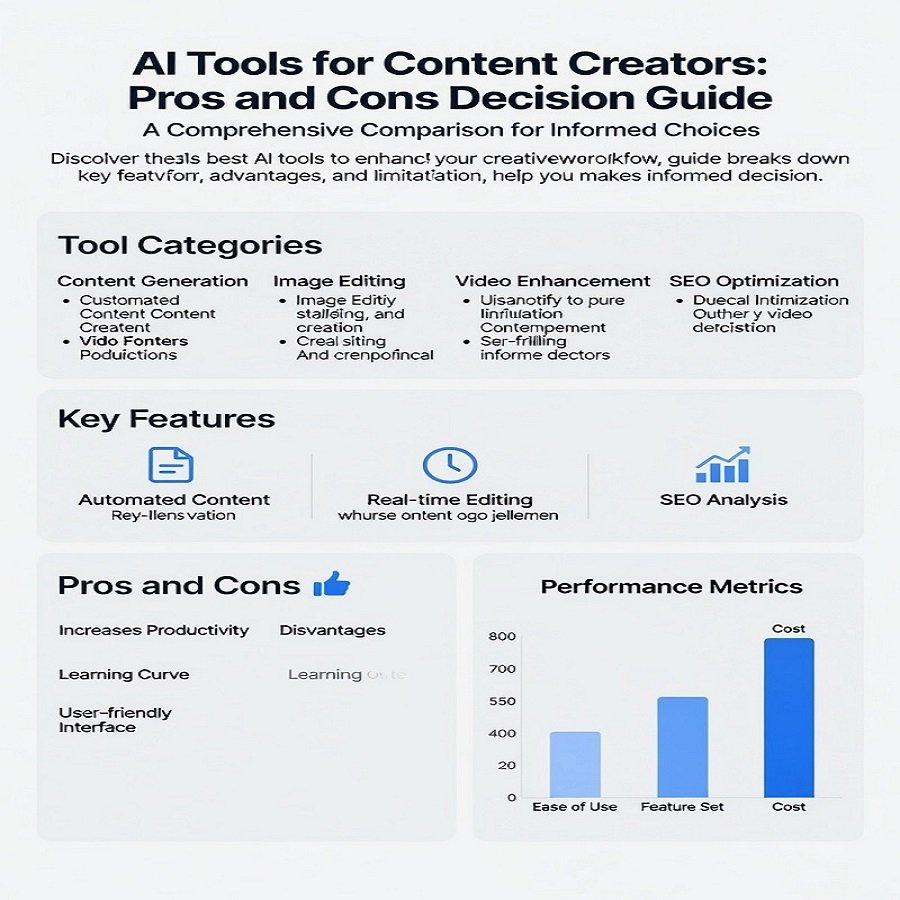
In recent years, artificial intelligence AI tools have completely reshaped how content creators work — from drafting text and editing videos to generating ideas and optimizing SEO. AI tools are software platforms powered by machine learning and natural language processing (NLP). They can automate repetitive tasks, speed up workflows, assist with research, and even generate full paragraphs of text for blogs, social media posts, scripts, and more.
What Are AI Tools for Content Creators?
These tools vary widely, ranging from AI writing assistants like ChatGPT and Copy.ai to more specialized creative tools for images, audio, and video. Considering the pace of innovation, many creators now use AI in their daily workflows, often for ideation, drafting, proofreading, and optimization.
However, as with any technology, AI comes with both benefits and drawbacks. In this article, we’ll explore the pros and cons of AI tools for content creators in a balanced, practical way so you can decide if they’re right for your projects.
Pros and Cons of AI Tools at a Glance
| Pros | Cons |
|---|---|
| Speeds up content production | Can lack originality and creativity |
| Reduces costs | Errors and inaccuracies require editing |
| Aids research and ideation | High dependency risk |
| Helps with SEO optimization | Possible ethical and copyright concerns |
| Scales content output | Limited nuanced understanding |
Pros of AI Tools for Content Creators
Faster Content Production
One of the most compelling advantages of AI tools for content creators is speed. What might take a human hours to brainstorm, research, and write can often be generated by an AI in minutes. These tools process language patterns and historical data quickly, allowing creators to produce outlines, drafts, and even full articles with remarkable efficiency.
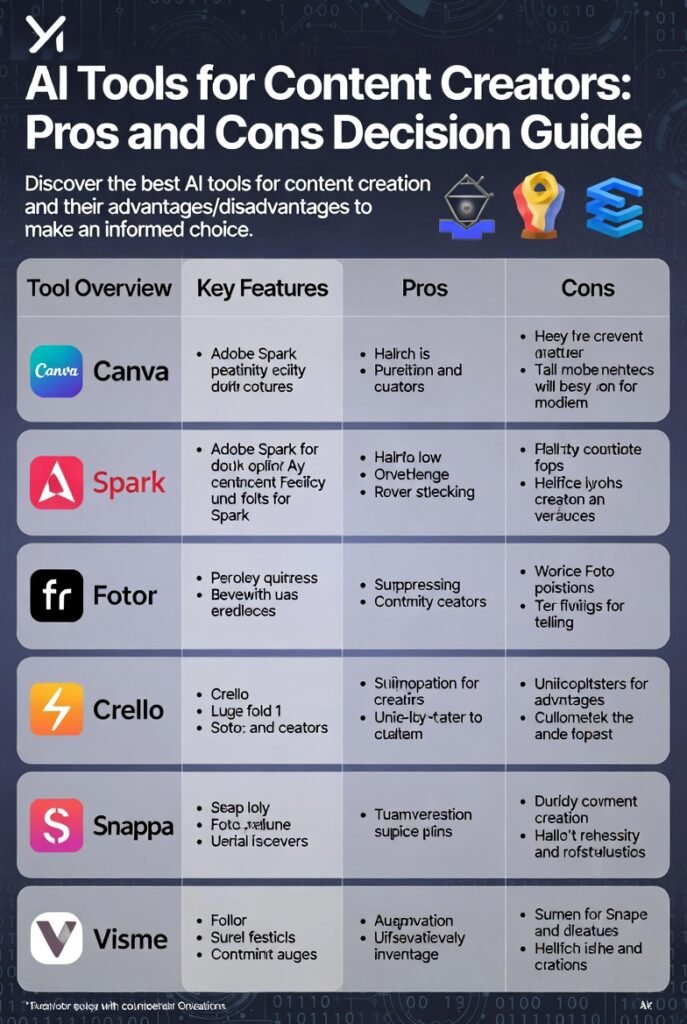
This advantage is particularly valuable for creators who manage multiple channels, such as blogs, newsletters, and social media accounts. For teams with tight deadlines or large content volumes, AI can significantly reduce the time from idea to publication.
Cost-Effectiveness for Small Teams
Hiring full-time or freelance writers, editors, and researchers can be expensive — especially for small teams or startups. AI content tools often come with subscription models that are much cheaper than maintaining a large content team.
By leveraging AI tools, creators can reduce labor costs while still maintaining a high level of output. This cost saving allows smaller creators or businesses to compete in content-driven markets they might not otherwise afford to enter.
Enhanced Research and Ideation Support
AI tools often have access to vast datasets and can generate topic ideas, outlines, and even trend analysis. Features like keyword suggestions, topic clustering, and semantic recommendations can help creators refine their content strategy and enhance relevance.
This research support can also expose creators to ideas and angles they might not have considered, providing a wider base from which to build compelling content that attracts targeted traffic.
SEO and Optimization Benefits
AI tools can assist with search engine optimization by suggesting keywords, topic ideas, and structural elements that align with current algorithmic best practices. While not perfect, many AI platforms integrate SEO insights into their content creation workflows, making it easier to tailor writing for discoverability.
For content creators, this automated SEO assistance can help ensure that articles, titles, and descriptions are aligned with what audiences search for most, improving visibility and long-term traffic potential.
Reduced Writer’s Block
Writer’s block can slow down production and stall creative momentum. AI tools excel at providing draft text, topic suggestions, and outline structures that can help creators break through creative barriers.
Rather than starting with a blank page, creators can use AI as a springboard, customizing and refining the output to fit their voice and purpose.
Cons of AI Tools for Content Creators
Lack of Human Creativity and Emotional Depth
One of the most frequently cited drawbacks of AI tools is their inability to truly replicate human creativity and emotional intelligence. While AI can recombine patterns and data, it often produces content that feels formulaic or generic. The nuanced storytelling and emotional resonance that differentiate truly great content often come from lived human experience — something AI cannot authentically replicate.
Human writers bring intuition, context, and personality to their work. This emotional connection is especially important in branded content, opinion pieces, and narratives designed to resonate on a deeper level.
Quality and Accuracy Issues
AI tools, especially when used without careful supervision, are prone to generating inaccuracies, outdated information, or misleading statements. Because AI systems are trained on large datasets up to a certain cutoff date, they may occasionally produce content that doesn’t reflect the latest facts or developments.
Human oversight is essential to review and correct errors. This means that while AI speeds up initial writing, the overall content production process still requires time — albeit in editing rather than drafting.
Risk of Dependence and Skill Erosion
There is a real risk that over-reliance on AI tools could erode the development of core writing and research skills. If creators become dependent on automation, they might weaken their ability to think critically, craft original narratives, or conduct deep research — all of which are essential skills in content creation professions.
The challenge, then, is balancing AI efficiency with skill growth to ensure creators remain adept storytellers and critical thinkers.
Ethical and Copyright Concerns
Using AI content generation raises ethical questions. AI tools sometimes pull widely distributed language patterns that could inadvertently mirror existing content, leading to possible copyright infringement. Content rights and ownership can also become murky: who owns content generated by an AI model — the user or the tool itself?
Creators should be mindful of these issues and ensure proper citations, unique phrasing, and originality checks before publishing.
SEO and Content Homogeneity Risks
As more creators adopt similar AI tools and models, there’s a risk of content becoming homogenized — meaning many articles start to look and read the same, diluting differentiation and reducing search engine appeal. Search engines tend to reward unique, high-value content; overly generic AI outputs may not stand out in competitive SERPs.
To combat this, creators should inject personal insights, original case studies, and unique perspectives that AI cannot generate.
Tools Comparison — Which AI Tools Work Best?
While the pros and cons above apply broadly to AI tools, it’s worth noting that different platforms are optimized for different tasks:
- ChatGPT / GPT-based tools: Excellent for drafting and ideation
- Grammarly / editing assistants: Best for stylistic refinement
- Keyword and SEO AI platforms: Help with topic optimization
No single tool is perfect — and the best approach usually involves combining human expertise with AI assistance for maximum impact.
How Creators Can Balance AI Use
One effective strategy is to use AI for the initial phases — outlines, draft text, and research suggestions — and then let human editors shape, refine, and personalize the content. This hybrid approach leverages the strengths of both parties.
- Stage 1: Use AI to brainstorm and draft
- Stage 2: Human edit for accuracy, tone, and originality
- Stage 3: Optimize for SEO and publish
This balance helps maximize productivity while preserving quality and personality.
Final Thoughts
AI tools are powerful allies for content creators — but they are not replacements for human creativity and judgment. The key is understanding the pros and cons of these tools and using them where they make sense while maintaining rigorous edits and human oversight.
If you’re a creator looking to scale output, explore AI tools thoughtfully, and combine their speed with your unique voice for the best results. You’ll benefit from both productivity gains and the authenticity that audiences crave.
What’s your score for this pros and cons article? Share your thoughts below.


Comments (2)
Elementor Page Builder Pros And Cons For WordPress Websites – JMConssays:
January 31, 2026 at 2:32 am[…] understand Elementor in action, watching a step-by-step page creation tutorial is highly effective. A visual walkthrough shows how layouts, widgets, and responsive controls work together in real […]
Discover Popular Questions from Google: Pros and Cons Trends – JMConssays:
February 1, 2026 at 12:21 am[…] questions such as “How to invest safely?”, “What are the symptoms of anxiety?”, or “Is artificial intelligence replacing jobs?” reveal deeper social, economic, and psychological trends. When analyzed […]