


When evaluating pros and cons of PHP developers, businesses often focus on cost alone, yet the real decision is far more strategic. PHP developers continue to power a large percentage of the web, from content-heavy platforms to enterprise-grade applications. Understanding where PHP developers excel and where they fall short allows decision-makers to align technical choices with long-term business goals.
PHP remains one of the most widely deployed server-side languages worldwide. According to W3Techs, over 76% of websites with a known server-side language still rely on PHP, which reinforces its ongoing relevance in modern development ecosystems.
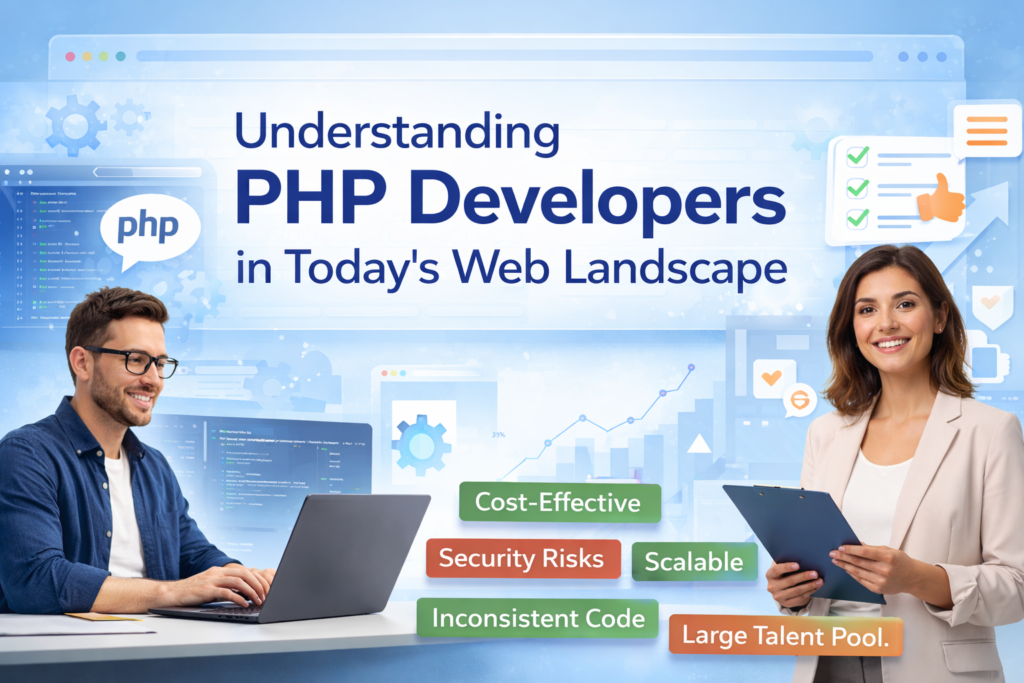
Understanding PHP Developers in Today’s Web Landscape
PHP developers specialize in building, maintaining, and optimizing server-side applications using PHP and its frameworks. Their work often supports dynamic websites, CMS platforms, SaaS products, and eCommerce systems.
What PHP Developers Typically Handle
PHP developers are responsible for:
- Writing server-side logic and application workflows
- Managing databases such as MySQL or PostgreSQL
- Integrating APIs and third-party services
- Securing applications against common vulnerabilities
- Optimizing performance for speed and scalability
- Maintaining legacy systems while upgrading features
PHP developers frequently work with frameworks like Laravel, Symfony, and CodeIgniter, which improve structure, security, and maintainability.
Why Businesses Continue Hiring PHP Developers
Despite the rise of newer languages, PHP developers remain in demand due to practicality, affordability, and ecosystem maturity.
Strong Market Adoption
Major platforms such as WordPress, WooCommerce, Drupal, and Magento rely on PHP at their core. This makes PHP developers essential for content-driven businesses and online retailers.
Business-Friendly Development Cycle
PHP supports rapid application development and streamlined deployment processes, enabling companies to bring products to market faster without compromising stability or long-term reliability. Its mature tooling, extensive documentation, and framework support help development teams reduce build time while maintaining consistent performance across environments.
Pros of Hiring PHP Developers
Understanding the advantages helps explain why PHP developers remain a preferred option across industries.
Cost Efficiency and Budget Control
PHP is open source, eliminating licensing costs entirely. This directly reduces development budgets and long-term maintenance expenses.
Industry hiring data suggests that PHP developers cost 20–40% less on average than developers working with proprietary stacks, especially when leveraging remote or offshore talent.
Key cost benefits include:
- No paid runtime licenses
- Affordable hosting environments
- Competitive global developer rates
Large and Accessible Talent Pool
PHP’s long-standing presence in web development has helped build one of the largest and most diverse developer communities worldwide. As a result, businesses gain access to a broad talent pool spanning all experience levels, from junior developers to seasoned enterprise architects with deep framework expertise.
This extensive availability significantly reduces hiring timelines, minimizes recruitment bottlenecks, and enables organizations to scale development teams efficiently as project requirements grow or evolve.
Faster Development with Mature Frameworks
Modern PHP frameworks streamline development by offering:
- Built-in authentication and routing
- ORM tools for database management
- MVC architecture for cleaner code
- Strong security defaults
Laravel, in particular, has become a favorite among PHP developers due to its expressive syntax and extensive documentation.
Excellent Integration Capabilities
PHP developers can integrate applications with:
- Payment gateways such as Stripe and PayPal
- Cloud platforms like AWS and Google Cloud
- Front-end frameworks including Vue and React
- CRM and ERP systems
This flexibility makes PHP developers valuable in hybrid technology environments.
Proven Scalability When Architected Correctly
While PHP is often criticized for scalability, well-architected PHP systems handle millions of users daily. Platforms like Facebook initially relied heavily on PHP before evolving their infrastructure.
With proper caching, load balancing, and optimized queries, They can scale applications efficiently.
Cons of Hiring PHP Developers
Balanced decision-making requires acknowledging the limitations as well. While they bring strong flexibility and cost efficiency, their effectiveness can vary significantly depending on experience level, coding standards, and project scope. Without careful vetting and technical oversight, businesses may encounter issues related to code quality, security practices, or long-term maintainability.
In addition, PHP may present challenges for highly complex or real-time applications that demand extreme concurrency or performance optimization. Although modern frameworks and architectures can mitigate many of these concerns, they often require additional planning, infrastructure, and senior-level expertise to execute successfully.
Security Risks from Inexperienced Developers
PHP itself is not insecure; however, poor coding practices can introduce vulnerabilities. Inexperienced PHP developers may overlook:
- Input validation
- Secure authentication
- Protection against SQL injection and XSS
According to OWASP, over 60% of web vulnerabilities stem from improper input handling, which reinforces the importance of skilled developers.
Inconsistent Code Quality Across the Market
Because PHP is relatively easy to learn, the skill gap between developers can be substantial. Some developers produce clean, secure, enterprise-level code, while others rely on outdated syntax, inefficient logic, or poor architectural practices that can hinder performance and maintainability.
This inconsistency makes thorough technical vetting essential, including practical coding tests and structured interviews. Regular code reviews, clear development standards, and ongoing quality checks further help ensure consistency and long-term project stability.
Performance Limitations in High-Concurrency Systems
PHP performs best in request-response environments. For real-time systems such as gaming servers or live analytics platforms, PHP may require additional infrastructure to compete with event-driven languages.
Legacy Code Challenges
Many businesses rely on older PHP applications that lack documentation or modern structure. PHP developers often spend considerable time refactoring legacy systems before adding new features.
This can impact timelines and budgets if not planned properly.
Market Perception and Talent Retention
Some senior developers prefer newer stacks, which can affect long-term retention. Businesses may need to offer competitive compensation and growth opportunities to keep experienced developers engaged.
Pros and Cons of PHP Developers Comparison Table
| Aspect | Advantages | Drawbacks |
|---|---|---|
| Cost | Lower development and hosting costs | Senior talent may demand higher pay |
| Talent Pool | Large global availability | Skill quality varies widely |
| Development Speed | Rapid builds with frameworks | Legacy systems slow progress |
| Security | Strong when best practices are followed | Vulnerable if poorly coded |
| Scalability | Scales well with planning | Requires architectural expertise |
Explainer: When PHP Developers Are the Right Choice
PHP developers are ideal when:
- Building CMS-driven websites
- Launching eCommerce platforms
- Developing SaaS dashboards
- Maintaining or upgrading legacy systems
- Working with limited budgets and tight timelines
For startups and content-focused businesses, {PHP} developers often deliver the best return on investment.
Explainer: When {PHP} Developers May Not Be Ideal
PHP developers may not be the best fit for:
- Real-time streaming applications
- AI-heavy computation platforms
- Highly concurrent microservices without additional tooling
In such cases, PHP can still be used, but only with advanced architectural support.
Real-World Insight from Industry Experts
“PHP continues to thrive because it solves real business problems efficiently. The language evolves, and so do PHP developers who commit to best practices.”
— Senior Web Architect, Stack Overflow Developer Survey
Embedded Video Insight
A practical overview of modern PHP development workflows, security practices, and performance optimization can be explored through developer conference sessions and Laravel community talks embedded within editorial content when publishing.
Hiring Tips to Maximize PHP Developer Success
To reduce risk and improve outcomes:
- Require framework experience (Laravel or Symfony)
- Test secure coding practices during interviews
- Review previous project architecture
- Enforce coding standards and documentation
- Implement CI/CD pipelines and automated testing
Companies that follow structured hiring processes report up to 35% fewer post-launch defects.
Final Thoughts
The pros and cons of PHP developers reveal a technology and talent pool that remains highly relevant when used strategically. They offer affordability, speed, and a mature ecosystem, while their limitations can be mitigated through proper hiring and modern development practices.
For businesses seeking reliable, scalable, and cost-effective web solutions, PHP developers continue to be a strong and practical choice.
Give this article a score — how helpful was this pros and cons guide? Share your rating and your thoughts in the comments below!


